Talk about AI without turning it into a lecture.
AI is already showing up in homework, search, apps, messages, and scams. This guide helps grandparents and caregivers start a calm conversation — not a fight.
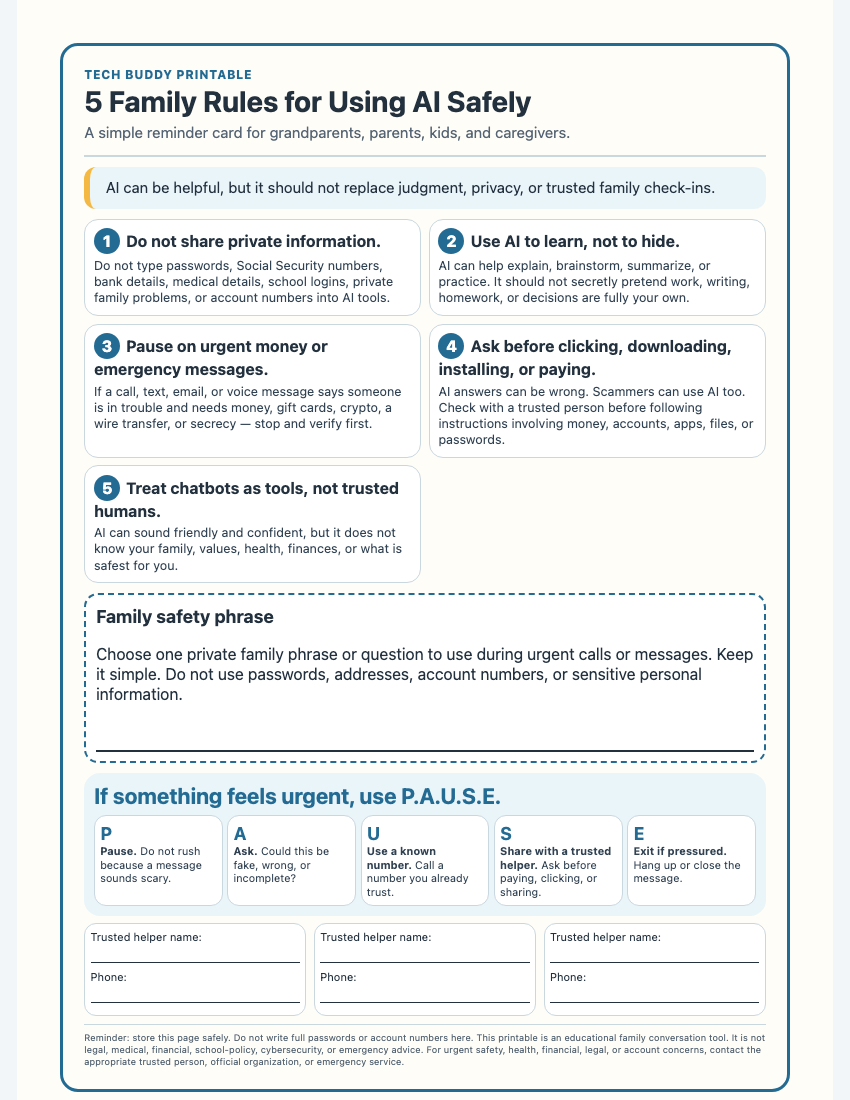
One-page PDF. Free to print and discuss with family. Educational only — not legal, medical, financial, school-policy, cybersecurity, or emergency advice.
What to ask first
- “What AI tools are kids using right now?”
- “What do people use them for at school?”
- “Have you found anything helpful or weird?”
- “What does your teacher allow?”
- “How do you check whether an AI answer is right?”
The family safety rule
If a call or message says someone is in trouble and needs money, gift cards, crypto, a wire transfer, secrecy, or immediate action — pause and verify using a trusted number.
How to talk to your grandkids about AI without sounding scared or judgmental
AI is becoming part of everyday life very quickly. Kids may use it for homework help, brainstorming, writing drafts, image creation, search answers, coding, games, or just curiosity.
That can feel strange if you did not grow up with it. It can also feel worrying when the news talks about cheating, fake photos, scams, and chatbots that sound almost human.
The goal is not to panic. The goal is to help your family keep good judgment.
Start with curiosity, not accusation
Instead of beginning with “Are you using AI to cheat?” ask open questions. Most kids are more likely to explain what is happening if they do not feel accused right away.
Five calm questions to ask
- What did you ask it?
- What did it help you understand?
- What part did you still do yourself?
- How did you check it?
- What does your school or teacher allow?
Three things to avoid
- Assuming every AI use is cheating.
- Trusting every AI answer.
- Turning the conversation into a lecture.
A good sentence to use
Quick family checklist
- Could this be wrong?
- Is it asking for money, passwords, codes, downloads, or private information?
- Is it about health, school rules, legal issues, bank accounts, or an emergency?
- Can I verify it with a known person or official source?
- What is the safest next step?
A quick safety note
This printable is an educational family conversation tool. It does not guarantee scam prevention and is not a substitute for professional or emergency help. For urgent safety, health, financial, legal, school, or account concerns, contact the appropriate trusted person, official organization, or emergency service.